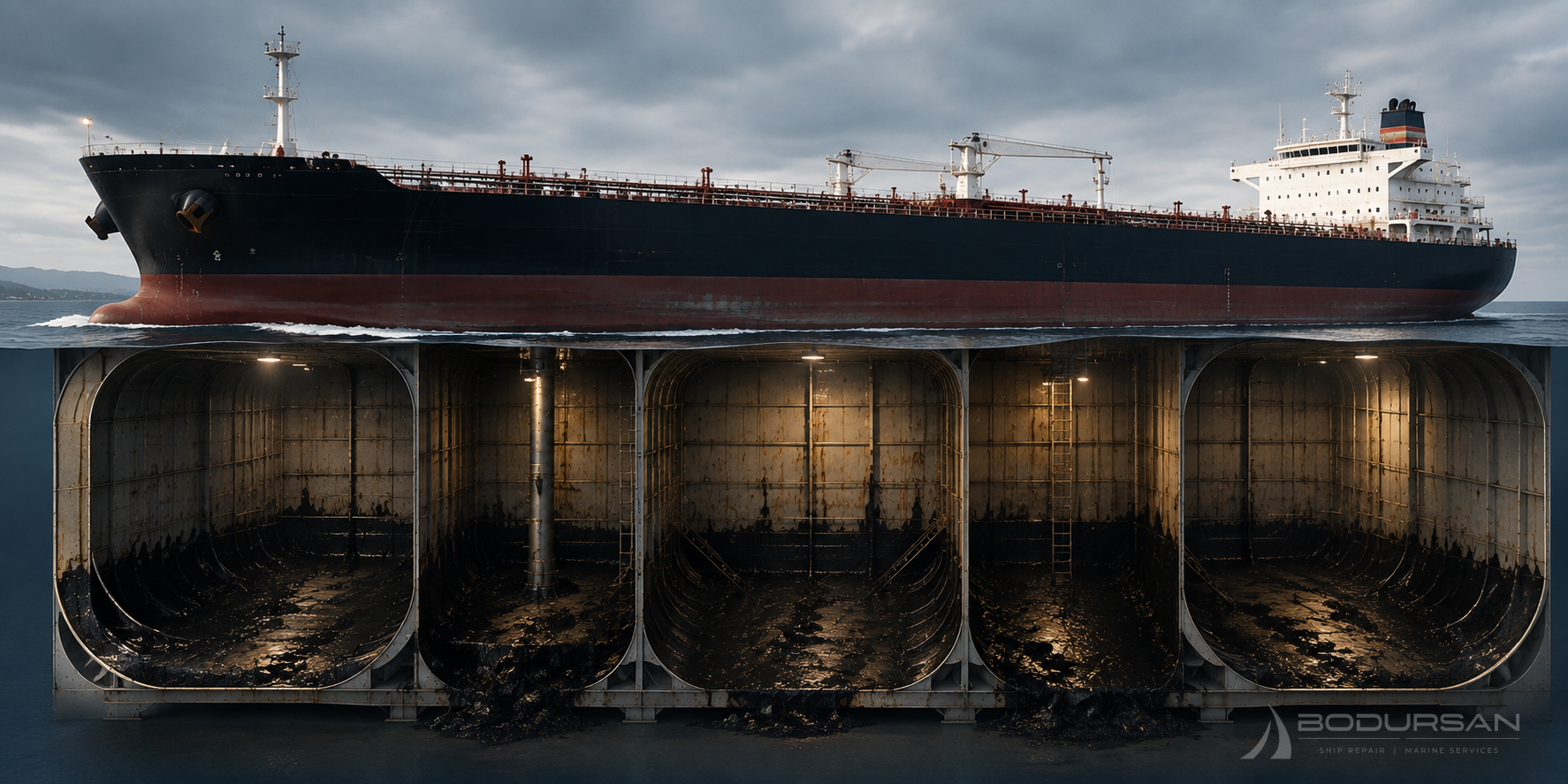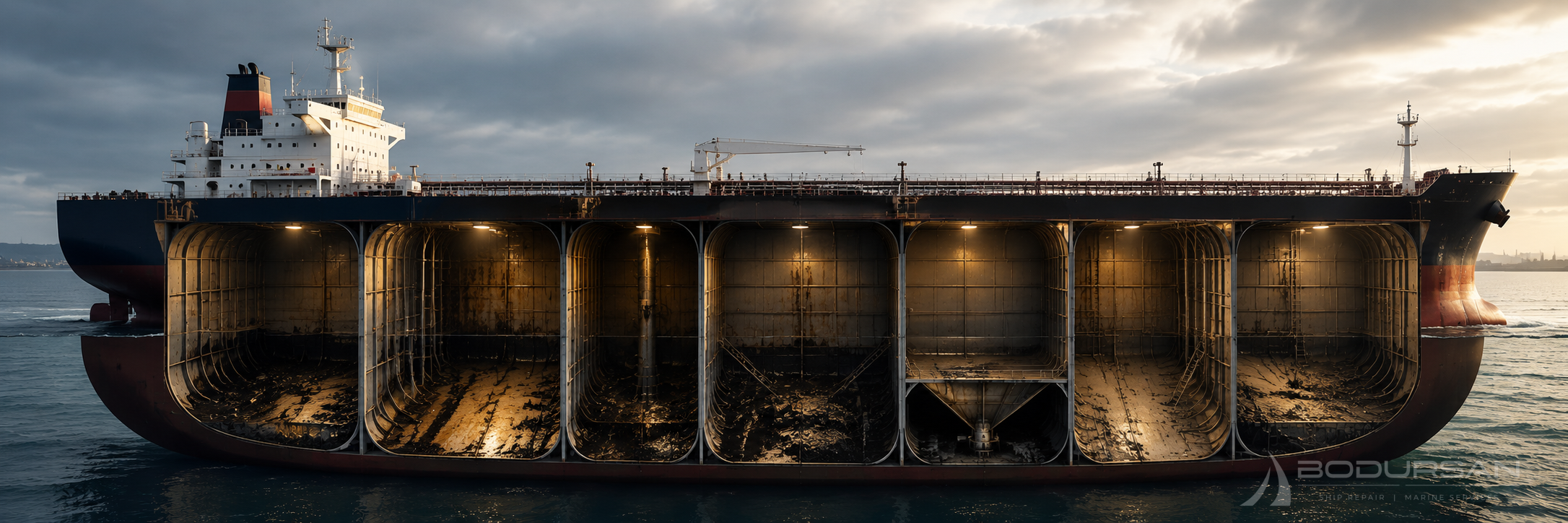
Volume alone does not predict the clock
Two tanks can hold similar cubic metres of sludge and still diverge by a full shift. Geometry decides how many times a crew must reposition tools, how far material must be dragged to a suction point, and whether a worker can stand safely while working a corner.
Planning demucking without a geometry note is planning blind.
Features that quietly multiply labour
- Deep hoppers — material packs hard; extraction needs staged digging and frequent hose clears
- Dense transverse framing — every bay becomes its own micro-job
- Heating-coil forests — access lanes shrink; residue hides under runs
- Restricted manhole placement — ventilation and rescue lines compete with tooling traffic
What to put in the pre-job brief
Beyond last cargo, list tank numbers, hopper depth class, coil presence, and whether previous cleaners left known problem bays. Photos of open tanks — even phone shots — cut surprises. If coating is aged or blistered, say so; pressure and tool choice change.
Our demucking hub maps the wider programme; geometry mainly affects the demuck phase itself, then ripples into wash time.
Practical outcome for owners and managers
Expect quotes to widen when geometry data is missing. A narrow band appears once hopper type and framing density are known. That is not commercial padding — it is how enclosed-space work scales.
Share arrangement sketches or maker tank drawings when available. Pair them with demucking services mobilisation requests so labour and waste logistics align on day one.